
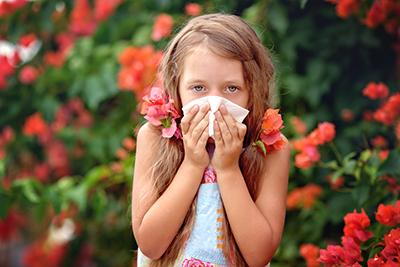
Does your child suffer from allergies? Sometimes it can be hard to tell if your child has a cold, or if your child has allergies, which can be treated. Your pediatrician can help your child get relief from allergy symptoms, but it’s helpful if you know what to look for.
What You Need To Know About Allergies in Children
When your child is exposed to certain substances, an allergic response happens. These substances are called allergens, and they can cause your child to experience a mild to severe reaction.
Some of the most common types of allergens include:
- Seasonal allergens, like grasses, trees, plant, and flower pollens
- Environmental allergens, like pet hair, pet dander, dust mites, and mold
- Food allergens, like peanuts, shellfish, and dairy
When your child is exposed to these and other allergens, your child might experience signs and symptoms like these:
- Itchy, watery eyes
- Itchy, runny nose
- Sneezing, coughing, or wheezing
- Rashes which can itch or burn
- Breathing problems
- Sore throat or nausea
If you notice any of the signs and symptoms listed above, you should bring your child to see the pediatrician for allergy testing. Allergy testing can determine the substances your child is allergic to, so these substances can be avoided.
Types of allergy testing include:
- Skin tests, in which a small amount of allergen is placed just under the skin and observed for a reaction
- Challenge tests, in which a small amount of allergen is inhaled or ingested and your child is observed for a reaction
- Blood tests, in which a sample of blood is taken and sent off to a laboratory where it is tested for an allergic reaction
Your pediatrician may recommend several treatments to relieve allergy symptoms, including:
- Prescription-strength antihistamine medications
- Prescription-strength decongestant medications
- Nasal sprays containing steroids
- Sublingual immunotherapy
- Rescue inhalers and epi-pens
- Allergy injections
Remember that an allergic reaction can also be life-threatening, so you need to seek out emergency services if your child is:
- Turning pale
- Having severe breathing problems
- Unable to speak
Want To Learn More?
To learn more about the signs, symptoms, and treatment of allergies in children, talk with an expert-your pediatrician. Call today.